

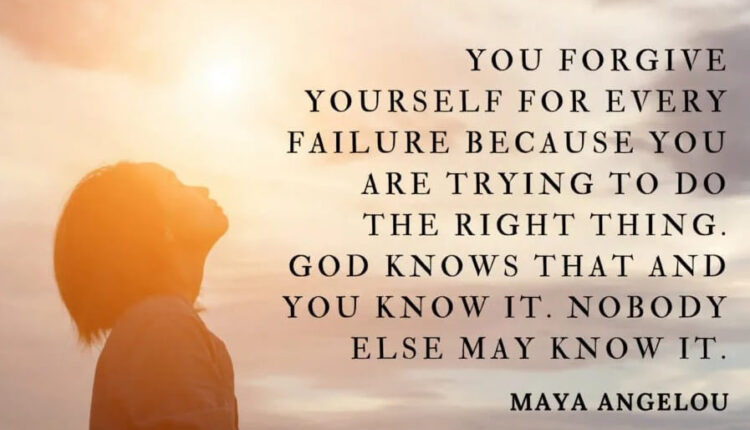
FORGIVING YOURSELF
Stop Being Your Own Biggest Critic. Forgive Yourself. Heal Your Heart.
In many of our cultures, strength is often seen in endurance—but true strength also lies in releasing the weight of guilt and embracing grace. This message reminds us that self-forgiveness is not weakness, but a powerful step toward healing and renewal. Rooted in faith, it teaches that just as God forgives us endlessly, we too must learn to extend that same mercy to ourselves. Our past mistakes do not define our future; rather, they are lessons that shape our growth. When we let go of shame and accept God’s love, we reclaim our peace, rebuild our confidence, and rise into the fullness of who we are meant to be.

Even as we have gone a couple of months into the year, I still have a resolution for the new year, though often easily forgotten, that you can start on any day of the year and that is Forgiving yourself. This topic is central to every faith and religion. God’s forgiveness is a central theme in the Bible and understanding it is crucial for grasping how to forgive yourself. It’s about letting go. It’s about you and you alone. Forgiving other people is easier than forgiving self. It accepts the wrong of others without trying to judge or change them or the situation. On the other hand, forgiving yourself is a tougher thing to do. Sometimes you feel you should have known better. You may think you have done that before and feel bad about it but there was no change. On lesser thought you may feel God will not forgive you again, since you have confessed the same sins severally and God had forgiven you repeatedly. It allows you to let go of the person you thought you needed to be. Forgiveness stakes time and rejection. You should learn to be patient with yourself. In forgiveness, you are aiming to let go of your pains/hurts, to accept the reality of what happened, not to excuse or reverse it. You are aiming to forgive your own self for your sake, not anyone else. You don’t seek relief or cure from the person who hurts you or caused you pain. Doing that will cause you more pain and give them more power over your healing. You are the person in charge of letting go of the pain inflicted on you. No one else. Funny enough, someone can’t be the pain and cure at the same time. They can be the instigator of the pain but not the healer of it.
Before you proceed with the forgiveness process, ask: 1. Who am I trying to forgive; 2. Am I ready to forgive; 3. Have I felt the Pain yet? 4 What lesson is the pain in trying to teach me? Be reminded that even though forgiveness is the practice of letting go some pains, it may take years to be fully realized. “Self-forgiveness is essential to self-healing.”- Ruth Carter Stapleton
What is forgiveness for the Mayo? Mayo Clinic Staff on What is forgiveness (Forgiveness: Letting go of grudges and bitterness) describes, “Forgiveness means different things to different people. Generally, however, it involves a decision to let go of resentment and thoughts of revenge. The act that hurt or offended you might always be with you, but forgiveness can lessen its grip on you and help free you from the control of the person who harmed you. Forgiveness can even lead to feelings of understanding, empathy and compassion for the one who hurt you. Forgiveness doesn’t mean forgetting or excusing the harm done to you or making up with the person who caused the harm. Forgiveness brings a kind of peace that helps you go on with life. Melissa Guarnaccia, LCSW on What Is Self-Forgiveness? It’s Important For Your Mental Health writes, “Choosing to forgive yourself doesn’t mean you are weak. Likewise, it does not mean you are off the hook for what happened or that you’re happy about what’s happened. Forgiveness, whether of someone else or yourself, can mean you accept actions and behaviors that occurred while willing to move forward. Forgiving yourself may mean letting go of the feelings and emotions associated with what went wrong. Many find it difficult to learn to forgive themselves because it can be tricky to move on without resolution. It’s easy to be our own biggest critic, but it’s helpful to try and extend to yourself the same grace as you might to anyone else. “Forgive all who have offended you, not for them, but for yourself”. – Harriet Nelson
Forgiveness Defined: Psychologists generally define forgiveness as a conscious, deliberate decision to release feelings of resentment or vengeance toward a person or group who has harmed you, regardless of whether they deserve your forgiveness. Just as important as defining what forgiveness is, though, is understanding what forgiveness is not. Experts who study or teach forgiveness make clear that when you forgive, you do not gloss over or deny the seriousness of an offense against you. Forgiveness does not mean forgetting, nor does it mean condoning or excusing offenses. Though forgiveness can help repair a damaged relationship, it doesn’t obligate you to reconcile with the person who harmed you or release them from legal accountability. Instead, forgiveness brings the forgiver peace of mind and frees him or her from corrosive anger. While there is some debate over whether true forgiveness requires positive feelings toward the offender, experts agree that it at least involves letting go of deeply held negative feelings. In that way, it empowers you to recognize the pain you suffered without letting that pain define you, enabling you to heal and move on with your life.
While early research focused on forgiveness of others by individuals, new areas of research are starting to examine the benefits of group forgiveness and self-forgiveness. Najwa Zabian on Welcome Home writes, “I told myself that having something to forgive doesn’t make you less than others. It doesn’t mean you are weak, just because you can’t let it go doesn’t mean something is wrong with you. I ask you: Have you stopped opening to others about how much you are struggling with letting go of a person, event or pain/ maybe you’re worried you’ve become a broken record. A bund. You are sick of your own self.”
You have done some wrong; denying or attempting to justify your deficiencies, defects or limitations and errors. Some, we regret, and others do us harm. You may have been caught on self-blaming and self-shamming; hold regrets to your past which is inevitable limitations of human nature and tendencies. These decimate your self-esteem that builds denial blocks to your accepting the reality of broken selves, resulting into self-limitation and inner critics as well as reveal the same truth of human nature – that all have sinned and come short of the glory of God (Rom 3:23) This means everyone makes mistakes and commits sins. Recognizing this universal truth helps us see that we are not alone in our failures. All our wrongdoing is first and foremost against God (Psalm 51:4; Gen 39:9) In Psalm 51:4, David acknowledges that all sin is ultimately against God: “Against you, you only, have I sinned and done what is evil in your sight.” Similarly, in Genesis 39:9, Joseph resists temptation by recognizing that sinning would be a great wickedness against God. Even when we try to do right, we end up doing wrong (Rom 7:19).
It also rests on the fact that forgiving oneself comes from understanding God’s forgiveness. God’s forgiveness is available to us when we confess our wrongdoings, accept the person and finished work of Jesus Christ. Ephesians 1:13-14 states that in Christ, we are marked with a seal, the promised Holy Spirit, guaranteeing our inheritance until redemption. 1 John 1:9 offers a clear path to forgiveness: “If we confess our sins, he is faithful and just to forgive us our sins and to cleanse us from all unrighteousness.” This verse emphasizes the importance of confessing our sins to receive God’s forgiveness. Ephesians 1:13-14 assures us that we are sealed with the Holy Spirit when we believe in Christ. This seal is a guarantee of our inheritance and redemption, emphasizing that God’s forgiveness is not temporary but eternal. Gods’ forgiveness is not transactional but relational. All who put faith in Him, even when we are still struggling in sin, God is faithful and cleanse us from all. Jesus’ sacrifice was enough for all our sins. Forgiving yourself then actually has to do with receiving God’s forgiveness.
The concept of forgiving oneself may sound easy but is difficult in practice. “We regret our bad decisions and are remorseful over the ways they hurt ourselves and others. The enemy continues to accuse us and remind us of our sins……”However, the good news about us is that God’s wrath for sins has been poured out on Jesus. Justice has been served. Living in guilt or self-punishment is a denial of the truth of the gospel.
How to Forgive Yourself According to the Bible:
Wondering what does the bible say on forgiving yourself? Here’s a quick answer
- 1 John 1:9-reminds us to confess our sins and trust in God’s forgiveness.
- Philippians 3:13-14-encourages us to leave our past behind and focus on the future
- Isaiah 53:4-teaches us to cast our sorrow upon the Lord after repentance.
What does the bible say on forgiving yourself?
The Bible emphasizes that self-forgiveness is less about our efforts and more about accepting God’s forgiveness. This involves acknowledging our mistakes, seeking His grace, and allowing the Holy Spirit to guide us through healing. Understanding and embracing God’s unconditional love is key to moving forward. I’m Richard Mattingley. With over five years of experience in mental health, I help individuals understand what the bible says on forgiving yourself. Accepting God’s forgiveness is a transformative step toward emotional and spiritual healing. The Bible teaches that forgiveness is essential for spiritual growth and healing. It emphasizes the importance of forgiving others as well as oneself. It acknowledges that everyone makes mistakes and falls short of perfection, but through God’s grace and mercy, we can find forgiveness and move forward. It encourages us to let go of guilt and self-condemnation, and to accept God’s forgiveness and love. By forgiving ourselves, we can experience freedom from shame and regret and live a life of peace and joy.
How to Forgive Yourself according to the Bible, after Falling into Sin
(Seth L. Scott ):How to forgive yourself according to the Bible: Grief, sorrow, and guilt over sin are designed to alert us to the objective reality of our separation from a relationship with God. The feelings of guilt connect to the reality of guilt and require a shift in focus from us to God as the offended party and the means of forgiveness and change. Paul contrasts subjective guilt feelings and this cycle of sin and guilt with Godly grief and sorrow, noting how “Godly grief produces a repentance that leads to salvation without regret” (2 Cor. 7:4). Forgiving ourselves after falling into sin must first begin with repentance to God and His forgiveness. Confess your sins to God and to someone else so that you can experience the healing of restoration and accountability for change, breaking the power of secret shame and guilt that sin holds over you. The shame of sin held hidden becomes a prison of perpetual guilt that powers the continuation of sin in your life. Speaking through confession disrupts our dysfunctional or ungodly thinking and directs the light to our standards for self with its recrimination and defeat. Is our standard for repentance, holiness, etc. higher or stronger than God’s standard? If our standard or expectation for forgiveness is more stringent than God’s standard, who then is the God in our life? Forgiving yourself requires recognizing and admitting your sin (Lam. 3:40), repentance through confession to God and sometimes others (Lk. 5:32), receiving God’s forgiveness (Rom. 5:16), and actualizing that acceptance and forgiveness through changed behavior in the power of the Holy Spirit (Rom. 8:10-11). The love of Christ and His forgiveness changes our allegiance and affections, transforming us as new creatures designed as ministers of reconciliation of the world to Christ and us to one another (2 Cor. 5:14-21). Forgiveness comes from God who loves us completely and unconditionally, calling us to love Him, others, and ourselves the same (Mk. 10:31-32). Self-forgiveness requires the full acceptance of God’s love for us and a willingness to depend fully and only on God’s perspective. If God forgives us and loves us, but we struggle to forgive and love ourselves, then we make ourselves God, dividing our loyalties and living in disobedience to God’s commands (John 15:12-14).
Bible verses about forgiving yourself:
- 1 John 1:9 – “If we confess our sins, he is faithful and just to forgive us our sins, and to cleanse us from all unrighteousness.”
- Psalm 103:12 – “As far as the east is from the west, so far hath he removed our transgressions from us.”
- Isaiah 43:25 – “I, even I, am he that blotted out thy transgressions for mine own sake and will not remember thy sins.”
- Romans 8:1 – “There is therefore now no condemnation to them which are in Christ Jesus, who walk not after the flesh, but after the Spirit.”
- Micah 7:18-19 – “Who is a God like unto thee, that pardoned iniquity and passed by the transgression of the remnant of his heritage? he retained not his anger forever, because he delighted in mercy. He will turn again; he will have compassion upon us; he will subdue our iniquities; and thou wilt cast all their sins into the depths of the sea.”
- Ephesians 1:7 – “In whom we have redemption through his blood, the forgiveness of sins, according to the riches of his grace.
- Colossians 1:14 – “In whom we have redemption through his blood, even the forgiveness of sins.”
- Psalm 32:5 – “I acknowledged my sin unto thee and mine iniquity have I not hid. I said, I will confess my transgressions unto the Lord; and thou forgive the iniquity of my sin.”
- 2 Corinthians 5:17 – “Therefore if any man be in Christ, he is a new creature: old things are passed away; behold, all things are become new.”
- Hebrews 10:17 – “And their sins and iniquities will I remember no more.”
- Matthew 6:14-15 – “For if ye forgive men their trespasses, your heavenly Father will also forgive you: But if ye forgive not men their trespasses, neither will your Father forgive your trespasses.”
- Proverbs 28:13 – “He that covered his sins shall not prosper: but whoso confessed and forsakes them shall have mercy.”
Steps to Forgiving Yourself for Past – Bible Study Tools
(Author: Frank Santora) +Remember What God Has Said. +Remain in Relationship with Others. “Simon Peter, Thomas called the Twin, Nathaniel of Cana in Galle, the sons of Zebedee, and two others of His disciples were together. +Run to Jesus and Receive What He Has Done. As Peter was fishing on the boat, something amazing happened. “Early in the morning, Jesus stood on the shore, but the disciples did not realize that it was Jesus. :Restart. “Jesus said, ‘Feed my sheep’” (John 21:17). Do you hear absolute forgiveness ?
AI Summary:-To forgive yourself biblically, follow these steps:
- Acknowledge your sin and take responsibility for your actions.
- Confess your sins to God and seek His forgiveness (1 John 1:9).
- Accept that God’s grace is sufficient and that He has forgiven you (Ephesians 1:7).
- Reflect on Scripture that emphasizes God’s love and mercy (Psalm 103:12).
- Release feelings of guilt and shame, trusting in God’s promise of redemption (Romans 8:1).
- Commit to making amends where possible and learn from your mistakes.
Benefits of Self Forgiveness:
- The scripture offers guidance and teaching on how self-forgiveness helps us to overcome feelings of guilt, shame and self-blame
- When you forgive yourself, you walk out healing with compassion with the power of the Holy Spirit
- Holding onto resentment and being unforgiving increases our stress level and takes a toll on our well-being
- Self-forgiveness helps us to drop the mindset of judging oneself harshly. This belittling mindset sabotages our efforts to leading fulfilling, meaningful and happy lives.
- Self-forgiveness causes one to be reasonably kind and compassion to self thereby reduces anxiety and related depression.
Concluding thoughts:
Interesting enough, forgiving oneself means admitting your own wrongdoing. It requires admitting that we are imperfect and unable to become perfect on our own. It means rejecting the idea that our efforts will ever atone for our wrongdoing. Forgiving ourselves is a profound and transformative experience rooted in God’s love and grace. Throughout our exploration of the we’ve discovered that understanding God’s forgiveness allows us to embrace our imperfections and accept His acceptance. We could move forward, reminding ourselves that our past does not dictate our future. Together, we can show kindness and compassion to ourselves as we live in the knowledge that God is always working in us. In recognizing our humanity, we learn that we are not alone on this journey. By seeking guidance and community, this task of self-forgiveness becomes easier and more manageable. Most importantly, accepting God’s grace gives us the strength to let go of the past and resound with joy for the future. Let’s hold on to these biblical truths and continue to grow in our understanding of love and forgiveness for ourselves. Carrying internal guilt and shame is a form of self-harm, and it keeps you from living a peaceful life. So, acknowledge your mistakes, learn from them, make amends, and forgive yourself. Once you find self-forgiveness, you can make choices that serve you better as you move forward.
Finally, as against whatever your fears were, self-forgiving strengthens you. You forgive yourself for all the times you said it’s okay, when you should have said, it’s not okay. It could simply mean, in the long run I have come to realize and understand myself better. I could look back at my younger years and reasonably forgive myself. I judge myself kindly by having hard times letting go of my past. I made sense of myself and understood who I am. Also, I do increase self-awareness which invariably eases self -forgiveness. “…switching is painful as it is healing. It takes times and effort. It requires taking leadership over your own life. And that will make you lose people. You might feel lonely but remember you are building that most powerful person in your life -You. And that is the biggest WIN.”